
Last updated October 30, 2026
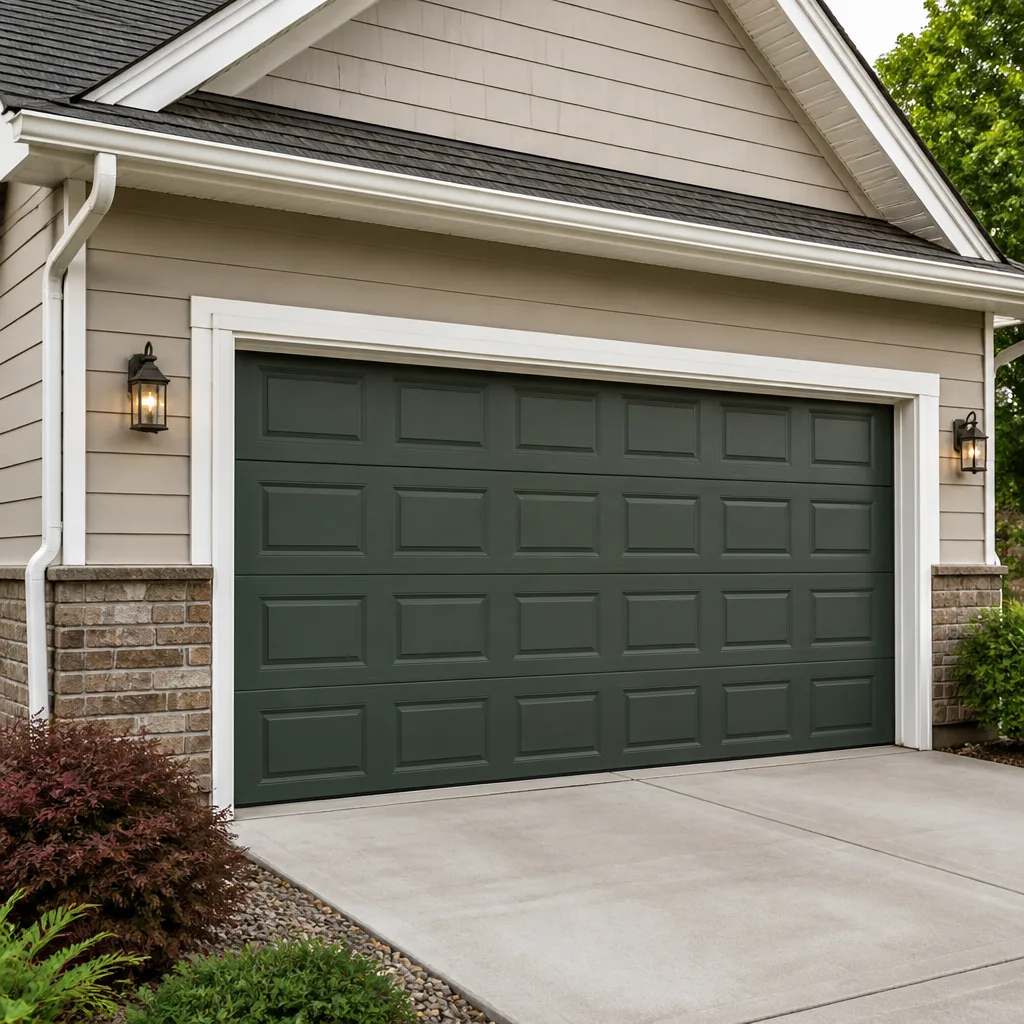 Raised-panel steel
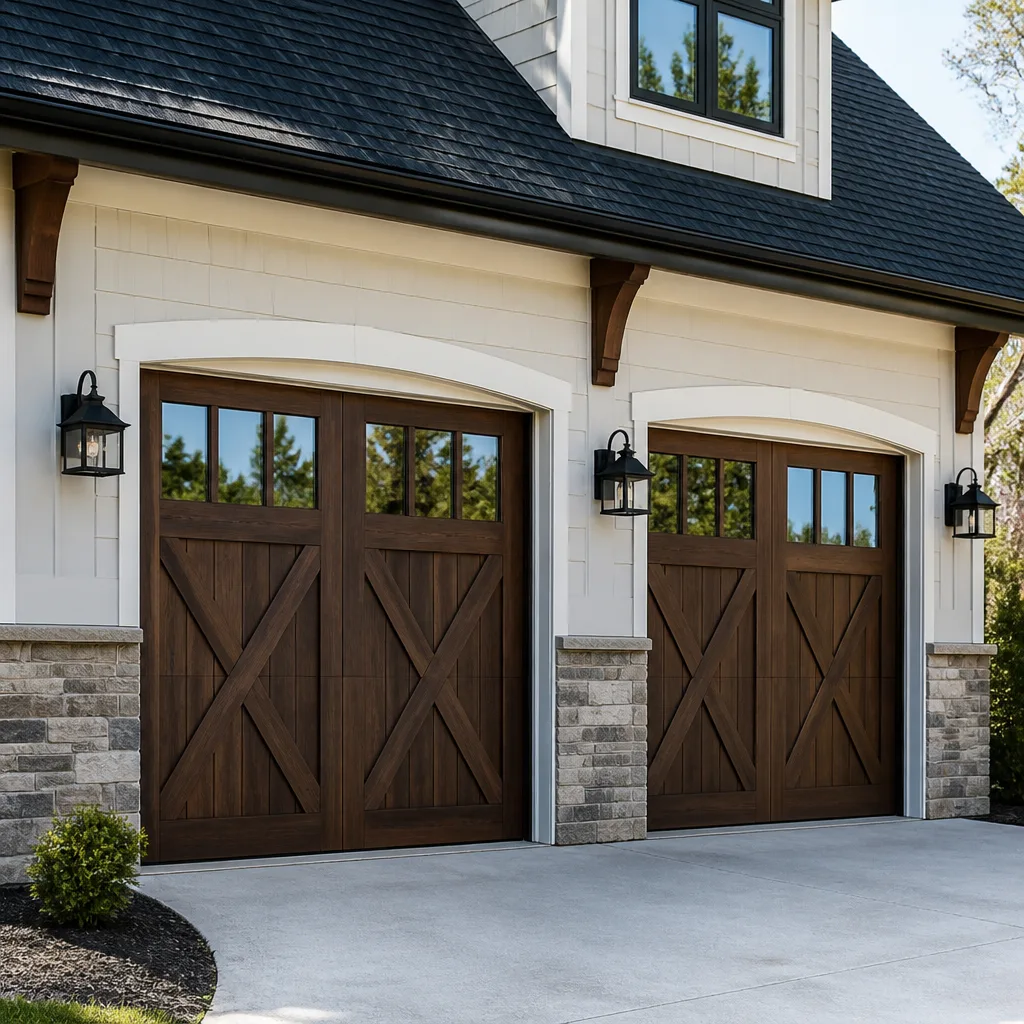 Carriage house
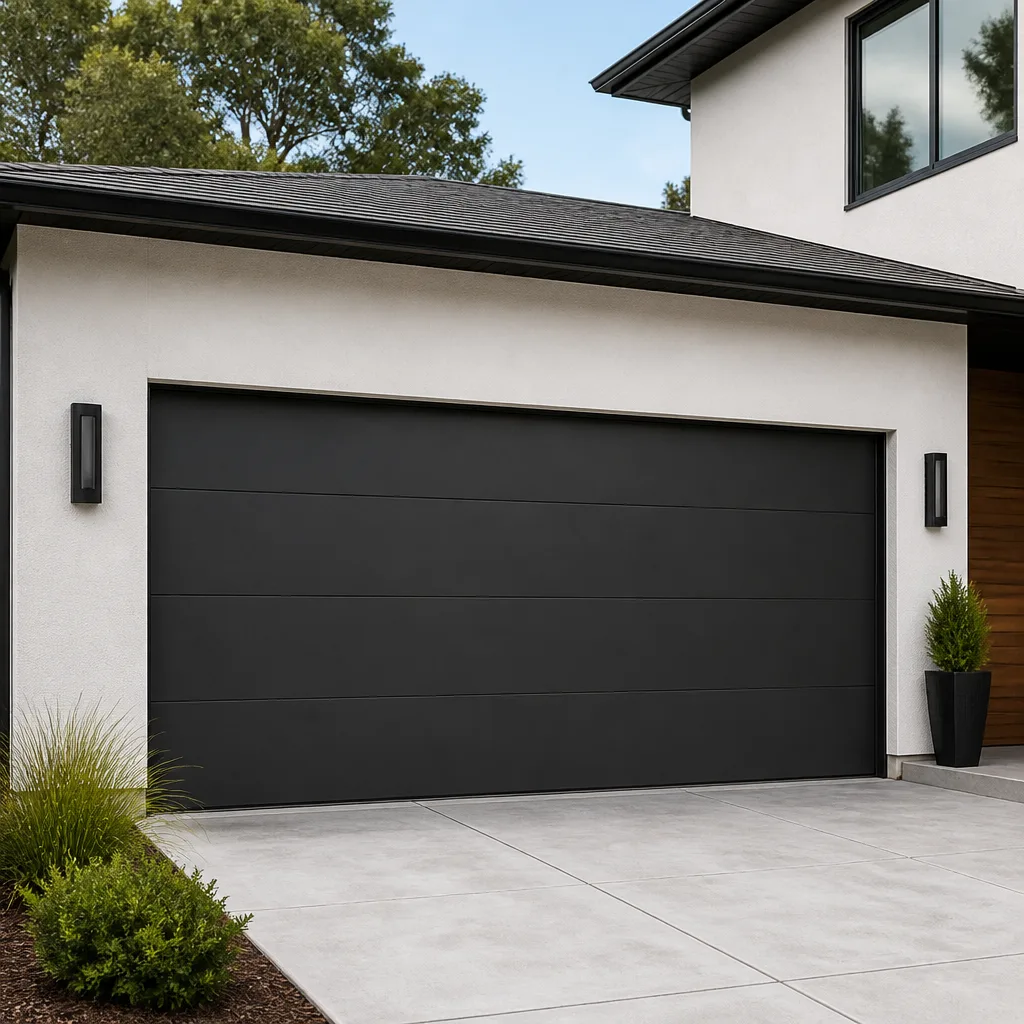 Modern flush
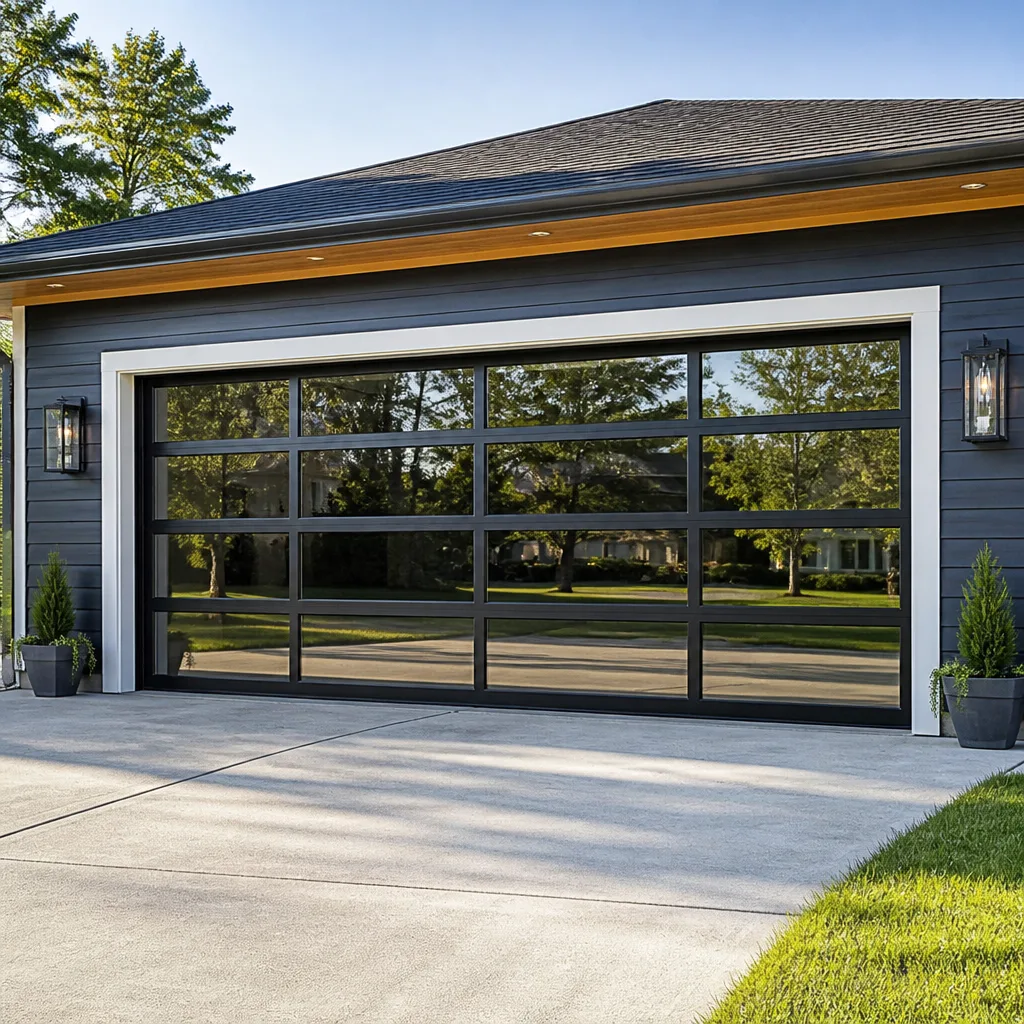 Full-view glass
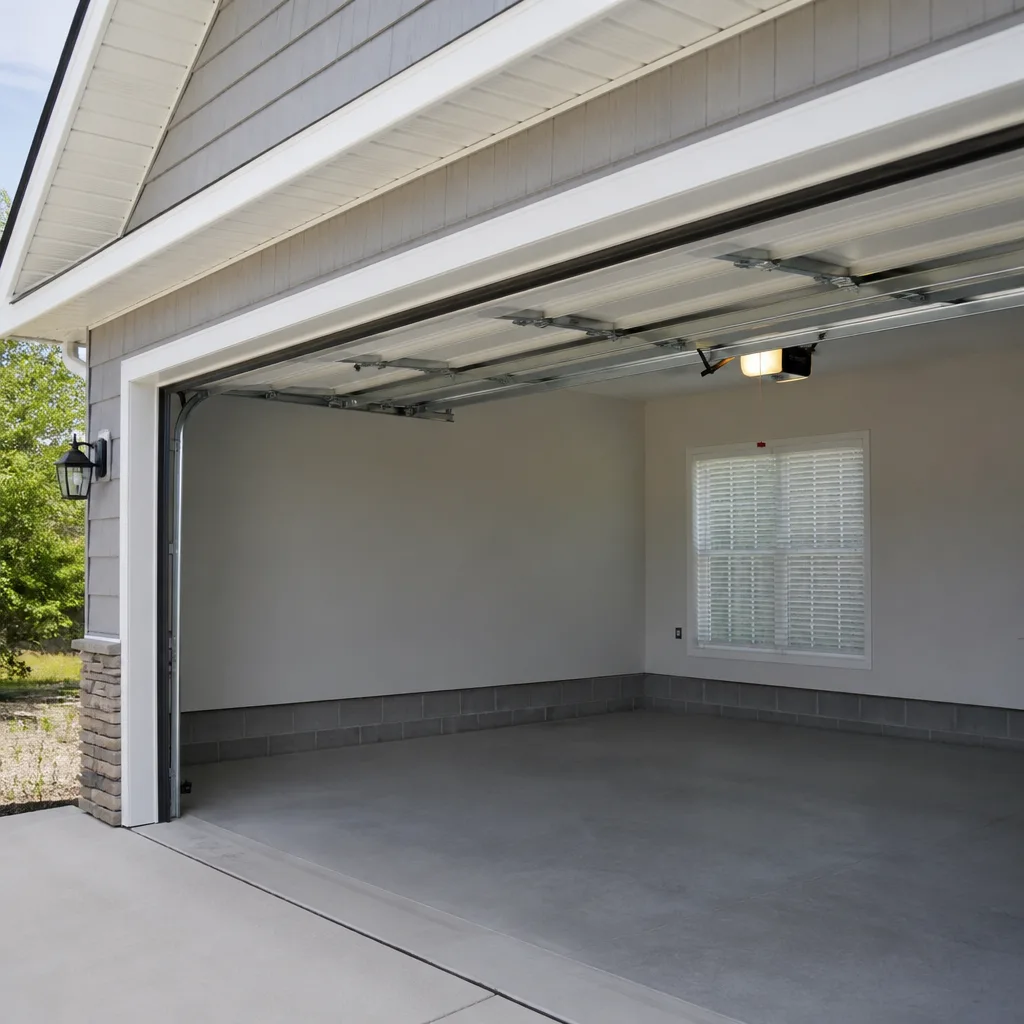 LiftMaster openers
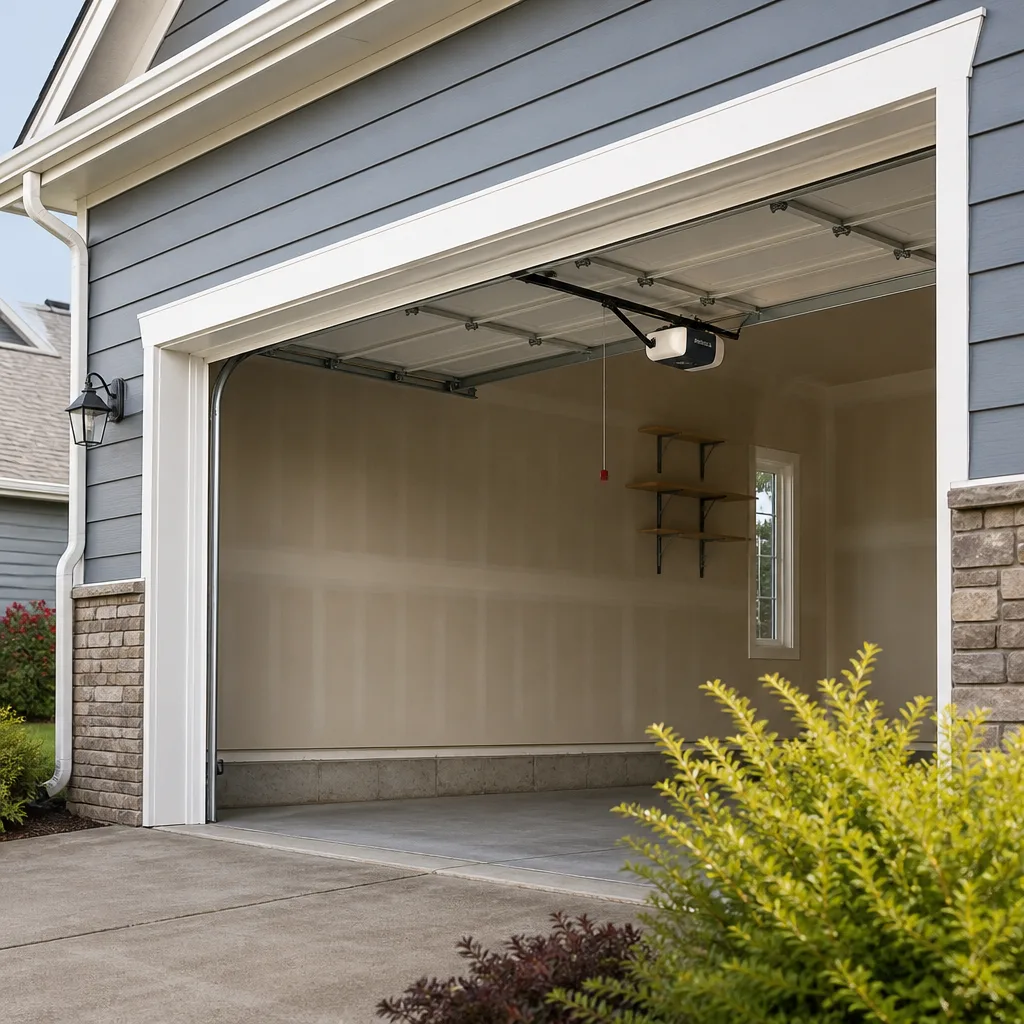 Chamberlain openers
Full 25-point door and opener safety check with every visit - springs, cables, rollers, tracks, and your LiftMaster or Chamberlain opener included
You get a price before we start. It does not change when the truck arrives.
Get your free estimateGarage Door Warning Signs: A Lakeland Homeowner’s Reference Guide
That three-second hesitation before your garage door moves isn’t a quirk. It’s a symptom, and it usually points to one of three specific components that are about to fail. Most Lakeland homeowners don’t call us because their door stopped working. They call because a warning sign they noticed weeks or months ago finally became a repair bill. This guide—along with our Seasonal Garage Door Care for Lakeland: Year-Round Homeowner’s Guide—decodes what your garage door is telling you, organized by what you hear, see, feel, and smell, so you can act before a $60 spring becomes a $900 repair.
Quick Answer
The most common garage door warning signs in Lakeland include grinding or popping sounds, a door that opens unevenly or hesitates, visible rust streaks on panels, and gaps forming along the bottom seal after rainy season. Any of these indicates a specific component under stress, and most are repairable for a fraction of the cost if addressed within weeks rather than months. If your door makes a loud bang, shakes violently, or refuses to stay open, stop using it and call a professional immediately.
Styles & brands we work with
Table of Contents
- Sounds: What Your Garage Door Is Trying to Tell You
- Movement Problems: Hesitation, Jerking, and Uneven Travel
- Visual Warning Signs: Rust, Gaps, and Panel Damage
- Smell and Environmental Clues Specific to Florida
- Urgency Levels: Monitor, Schedule Soon, or Stop Using Immediately
- The Warning Sign Decision Tree
- What Deferred Repairs Actually Cost in Lakeland
- Common Mistakes to Avoid
Sounds: What Your Garage Door Is Trying to Tell You
Garage doors make noise. That’s normal. But specific sounds point to specific problems, and learning the difference is the single most useful diagnostic skill a Lakeland homeowner can develop. We’ve walked into hundreds of garages where the homeowner said “it’s been making that noise for a while” and the fix had already doubled in cost.
The sounds that matter, and what they mean
- Grinding or scraping (metal on metal): This almost always means a roller is failing or the track is misaligned. The roller bearings wear out, the wheel stops spinning, and it drags along the track. Left alone, the roller can seize entirely and rip out of its bracket, sending the door off-track. This is a schedule-soon issue, not a monitor issue.
- Popping or snapping when the door moves: In Lakeland’s humidity, torsion springs develop surface rust. As the spring winds and unwinds, rust flakes break loose and create a popping sound. This is an early warning that the spring is deteriorating. Springs typically last 7 to 10 years in Florida’s climate, less than the national average, because moisture accelerates metal fatigue.
- Squealing or high-pitched whine: For belt-drive openers from LiftMaster or Chamberlain, a whine often means the belt tension is off or the drive gear is wearing. For chain-drive Genie openers, the same sound usually points to chain lubrication or tension. The opener is working harder than it should, which shortens its life.
- Rattling or chattering during travel: Loose hardware. Bolts, hinges, and bracket fasteners work themselves loose over years of vibration. The door may still operate, but loose hardware allows panel flex, which causes premature wear on hinges and rollers.
- A single loud bang, like a gunshot: That’s a torsion spring breaking. One spring, sudden release of tension, no ambiguity. Stop using the door. Do not try to open it manually by pulling the emergency release, especially if it’s a double-spring system with one still wound, because the imbalance creates a serious injury risk.
Here’s the pattern we see in Lakeland neighborhoods like Lake Hollingsworth and Dixieland: the small grinding noise starts, gets ignored for six months, and then the roller seizes on a Tuesday morning when the car is inside the garage. The repair is now a track realignment and possibly a new roller bracket instead of a $30 roller replacement.
Movement Problems: Hesitation, Jerking, and Uneven Travel
A healthy garage door moves at a consistent speed from the moment you press the button to the moment it settles on the ground or the header. Any deviation from that consistency is data. The three-second hesitation mentioned at the top of this guide is usually one of these three components: the opener capacitor, the spring tension, or the door’s balance.
Reading your door’s movement
- Hesitation before moving (1 to 4 seconds): The opener motor is struggling to overcome initial resistance. This is often a failing capacitor inside the opener, which is the electrical component that gives the motor its starting burst. It can also mean the springs have lost tension and the opener is doing more of the lifting than it was designed to do. Either way, the opener is being run harder than it should be, and replacement capacitors are far cheaper than replacement openers.
- Jerking or stuttering during travel: This typically points to damaged rollers, worn hinges, or sections of track that have come out of alignment. The door catches, releases, catches again. Each catch puts a stress spike on the hinges and panels. In garages near Lakeland’s lakes, the humidity regularly causes track brackets to rust at the mounting points, which allows the track to drift inward or outward.
- Uneven travel (one side higher than the other): If the left side of the door is noticeably higher than the right while moving, the lift cables are stretching or a spring has uneven tension. On a standard two-spring system, one spring can fatigue faster than the other. The door pulls to one side, which then wears the rollers on that side unevenly. This is the precursor to a cable snapping.
- Door reverses or stops midway for no reason: This often gets blamed on the safety sensors, and sometimes that’s correct, dirty sensor lenses are an easy fix. But if the sensors are clean and aligned and the door still reverses, the opener’s force settings may be misadjusted or the door is binding on the track. Afternoon heat in Lakeland causes metal tracks to expand, which can reduce clearance enough to trigger the opener’s force limiter on a door that worked fine in the morning.
The mistake most homeowners make with movement problems is adapting to them. The door hesitates, so you hold the button longer. The door jerks, so you don’t park under it while it moves. You’ve adjusted your behavior to accommodate a failing component. The component doesn’t know you’ve adapted. It keeps failing.
Visual Warning Signs: Rust, Gaps, and Panel Damage
Florida’s climate doesn’t just affect how your door sounds and moves. It changes how the door looks, and some of those visual changes are early diagnostic signals. Lakeland’s rainy season runs from roughly June through September, and that’s when we see the most visual warnings emerge.
What to look for, and what each sign indicates
- Rust streaks on the door’s interior or exterior: The steel panels themselves usually have a rust-resistant coating, but the hardware, springs, hinges, and cable anchors do not. Rust streaks running down from a hinge or bracket mean moisture is pooling there and the metal is oxidizing. In Florida, that process moves faster than homeowners expect. A hinge with heavy surface rust is structurally compromised and may snap under load.
- Bottom seal gaps that appear after rainy season: The rubber or vinyl weatherstrip along the bottom of the door hardens in Florida’s heat, then cracks. When the summer rains come, water finds those cracks and pools inside the garage. If you see daylight under a closed door, or worse, if you’ve noticed water stains spreading from the garage floor after a storm, the seal has failed. This is one of the cheapest fixes in the entire garage door system, and one of the most deferred.
- Swollen or warped panels: If you have a wooden door, or a steel door with a wood-composite core, Lakeland’s humidity causes the material to absorb moisture and expand. Swollen panels bind against each other and the track, forcing the opener to work harder. On steel doors, look for bubbling paint or rust bleeding through the panel seams, which means moisture has gotten inside the panel itself.
- Visible gaps between panels when the door is closed: The panels should sit flush against each other. If you can see light or feel air moving through the horizontal seams, the door is either out of balance or the hinges have worn enough to allow panel separation. This also creates entry points for Florida’s insects and for the humidity that accelerates everything else.
- Cracked or separating door sections: This is especially common on older doors in Lakeland that have been through multiple hurricane seasons. Stress cracks at the top corners of a panel are a structural warning. A cracked panel can fail while the door is in motion, which is dangerous for anyone underneath it.
Smell and Environmental Clues Specific to Florida
Smell is the warning sign category almost no one thinks about, but in Lakeland’s climate it’s more informative than homeowners realize.
What your nose and your garage environment are telling you
- Electrical or burning smell after operating the door: This is a serious warning. The opener’s motor may be overheating, a capacitor may be leaking, or wiring may be shorting. Any persistent electrical smell from a garage door opener means the unit should be unplugged and inspected by a professional before further use. We diagnose first and recommend second, and this is one diagnosis that always ends with a clear safety recommendation.
- Musty or mildew smell that gets worse after rain: This usually means water is getting past the bottom seal or around the door’s perimeter. The water pools, evaporates in Florida’s heat, and creates the damp smell. It’s not just unpleasant, it’s a sign that the seal has already failed and is letting water in every time it rains.
- Ozone or burnt-rubber smell near the opener unit: The drive belt on a belt-drive opener can overheat if the tension is wrong. The odor is subtle but distinct. On a Chamberlain or LiftMaster belt-drive system, this smell means the belt is being stressed and the tension needs adjustment before the belt snaps.
Lakeland’s subtropical climate creates challenges that homeowners in drier regions don’t face. The combination of summer heat, high humidity, and afternoon thunderstorms accelerates every failure mode. A garage door that would last 15 years in Arizona might need major service at year 10 in Polk County. That’s not a design flaw. It’s climate reality, and it means the warning signs come earlier and need to be taken more seriously.
Urgency Levels: Monitor, Schedule Soon, or Stop Using Immediately
Not every warning sign requires a phone call today. Part of being an informed homeowner is knowing what can wait, what can’t, and what’s actively dangerous. Here’s how we categorize each warning sign when we talk to Lakeland homeowners.
MONITOR: Keep an eye on it, no immediate action needed
- Minor surface rust on panels with no structural compromise
- Occasional slight noise that doesn’t change or worsen
- A bottom seal that’s beginning to show small cracks but still sealing
- Opener running slightly warmer than usual on hot summer days
SCHEDULE SOON: Call within the next few weeks to prevent a bigger repair
- Grinding or scraping noises from a roller or track
- Hesitation at the start of travel that’s consistent, not occasional
- Uneven travel where one side is visibly higher
- Visible rust on hinges, spring hardware, or cable anchors
- Bottom seal gaps that let daylight through
- Any popping sound from the torsion spring area
STOP USING IMMEDIATELY: Unplug the opener, call a professional today
- A single loud bang followed by the door not opening (broken spring)
- Visible cable fraying or a cable that has slipped off the drum
- Electrical or burning smell from the opener or wall control
- A door that falls rapidly when released or when the opener disengages
- Any crack or separation in a panel that’s worsening
- The door coming off its track, even partially
One note about torsion springs specifically: these springs hold enough tension to lift a 150 to 300 pound door, and when they break or when someone attempts to adjust them without the proper tools and training, the result can be severe injury. High-tension springs are not a DIY repair under any circumstances. The winding and unwinding process involves stored mechanical energy that releases instantly if the proper winding bars slip. We’re saying this as clearly as we can: call a professional for anything involving torsion springs.
The Warning Sign Decision Tree
When a homeowner calls us about a noise or a movement issue, here’s the mental model we walk them through. It’s the same framework our technicians use, and it’s simple enough to use standing in your garage looking at the door.
- Identify the symptom accurately. Write down what you observed. “Grinding noise when door is halfway up” is far more useful than “door sounds weird.”
- Match the symptom to the component. Grinding means rollers or track. Popping means springs. Jerking means hinges or alignment. Hesitation means opener or balance. Uneven travel means cables or spring tension.
- Assess the urgency using the three-tier system above. Monitor, schedule soon, or stop using immediately. Be honest with yourself about how long the symptom has been present.
- Decide: can you safely address this yourself, or does it need a professional? Lubricating a roller bearing or tightening a visible hinge bolt is reasonable for a homeowner comfortable with basic tools. Anything involving torsion springs, lift cables, track realignment, or opener internals is professional territory, and specifically the kind of work that Garage Door Repair in Dade City covers routinely.
- If professional help is needed, call someone who specializes in garage doors specifically. A general handyman who does doors, plumbing, and drywall may not recognize a Chamberlain opener’s specific failure mode or a Clopay panel’s warranty requirements. Specialists who work on the full range of garage door and opener brands understand the systems, not just the symptoms.
This decision tree works because it forces a diagnosis before an action. Most homeowners skip straight from “something’s wrong” to “call someone,” without ever clarifying what the something is. That’s fine for an emergency. It’s less fine for a maintenance issue where knowing the likely component helps you have a better conversation with whoever shows up, whether that’s us or another contractor you found through our guide on How to Hire a Garage Door Contractor in Lakeland.
What Deferred Repairs Actually Cost in Lakeland
The “it still works, so it’s fine” assumption is the most expensive sentence in residential garage door ownership. Here’s the math, based on what we see across Lakeland and central Florida.
Early intervention versus deferred repair: typical cost ranges
| Warning Sign | Early Repair | Deferred Repair |
|---|---|---|
| Worn roller (grinding noise) | $30 to $60 per roller | $250 to $500 for track realignment plus replacement parts |
| Bottom seal crack | $80 to $150 for replacement | $500+ for water damage remediation to garage floor and stored items |
| Popping spring (early fatigue) | $180 to $340 for spring replacement | $600 to $900 if the spring breaks and damages the opener, cables, or panels |
| Hesitation from opener capacitor | $120 to $200 for capacitor replacement | $400 to $700 for full opener replacement when the motor burns out |
| Loose hardware (rattling) | $75 to $125 for tightening and adjustment service | $300+ when a loose bracket lets the door come off track |
| Uneven travel (cable or spring tension) | $150 to $250 for spring balance and cable adjustment | $800+ when a cable snaps and the door falls, often damaging panels |
These are representative ranges for the Lakeland market, not quotes. Your specific repair will depend on your door’s brand, age, and condition—factors we cover in our Choosing the Right Garage Door Brand: A Buyer’s Guide for Lakeland. But the pattern holds across every category: the deferred repair costs three to five times more than the early intervention. That’s not because repair companies are marking up the emergency work. It’s because the original component’s failure damages other components on its way out. A broken spring doesn’t just need a new spring. It often needs new cables, new cable anchors, sometimes a new opener if the door slammed hard enough.
The takeaway: your garage door is telling you what’s wrong. The earlier you act on the warning, the smaller the repair. The longer you wait, the more components get pulled into the failure.
Common Mistakes to Avoid
- Lubricating a failing roller to stop the grinding noise. Lubricant temporarily quiets a roller whose bearings are already gone, buying you a few weeks of relative silence while the roller continues to degrade. By the time the noise returns, the repair is worse than it would have been. When the bearing is gone, the roller needs replacement, not lubrication.
- Disconnecting the opener and running the door manually as a “solution.” If the door is too heavy to lift or won’t stay up when you pull the emergency release, the springs have failed. Running the door manually in that state puts enormous strain on the cables and your back, and it does nothing to address the underlying failure.
- Assuming a smart opener’s error codes are just “glitches.” Modern openers from LiftMaster, Chamberlain, and Genie include onboard diagnostics that flash error codes for specific failures. Ignoring those codes and clearing them with a power cycle is like turning off a check engine light and hoping the engine follows. The code exists because the opener detected a force imbalance or sensor fault.
- Replacing the opener when the door itself is the problem. We see this constantly. The door binds, the opener struggles, the homeowner assumes the opener is worn out and installs a new one. The new opener now struggles against the same binding door, and within a year it’s failing too. Diagnose the door first. The opener is often doing exactly what it’s being asked to do against unreasonable resistance.
- Ignoring rust on springs and cables because “metal rusts in Florida.” Surface rust on the spring cone or cable drum is normal. Rust that causes flaking, pitting, or visible thinning is structural. A pitted torsion spring is a spring that’s already partway through its fatigue life. In Polk County’s humidity, that fatigue accelerates faster than in most of the country.
- Waiting until the door won’t open to schedule service. When the door won’t open, your car is trapped and the repair is now an emergency. Emergency repairs cost more, not because of price gouging, but because the failure has done its maximum damage. Scheduling service when the warning sign first appears is always cheaper and more convenient than scheduling it when the door is stuck closed.
See the difference
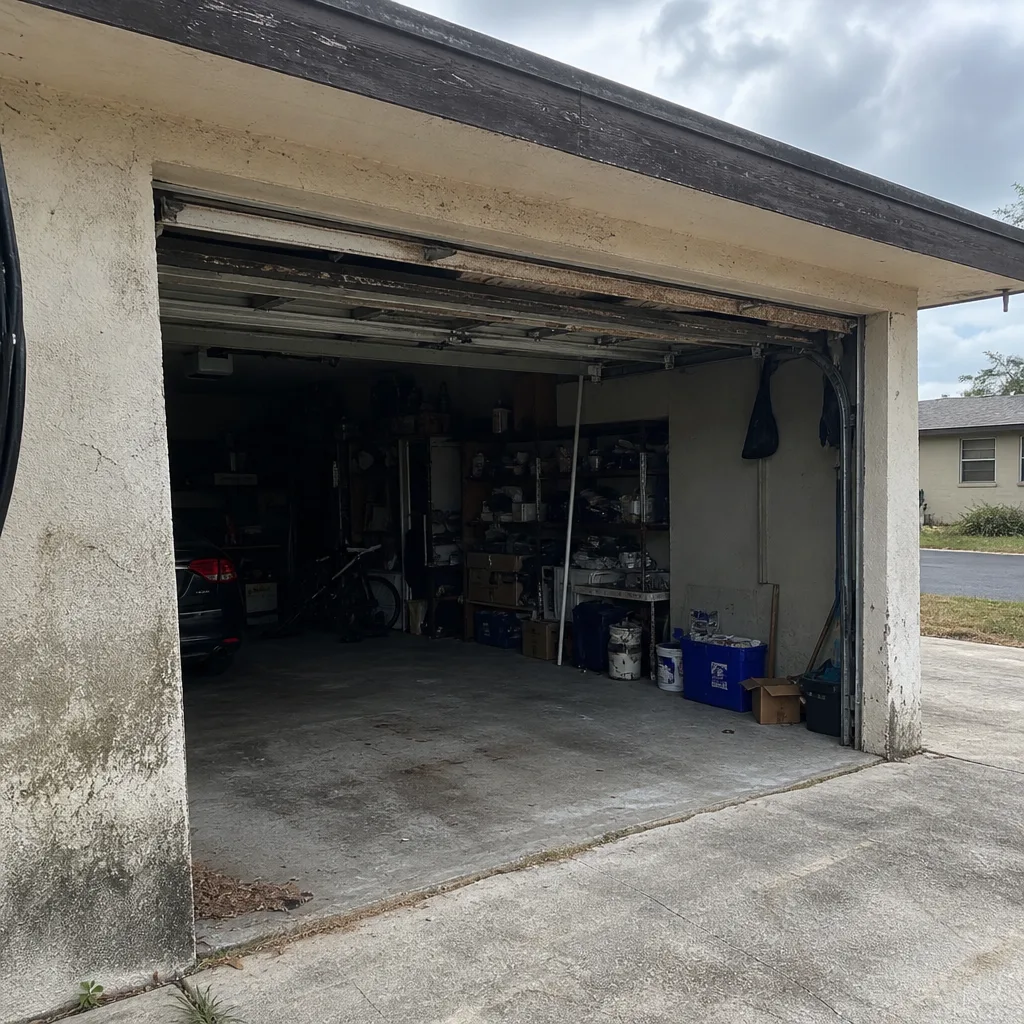 Before
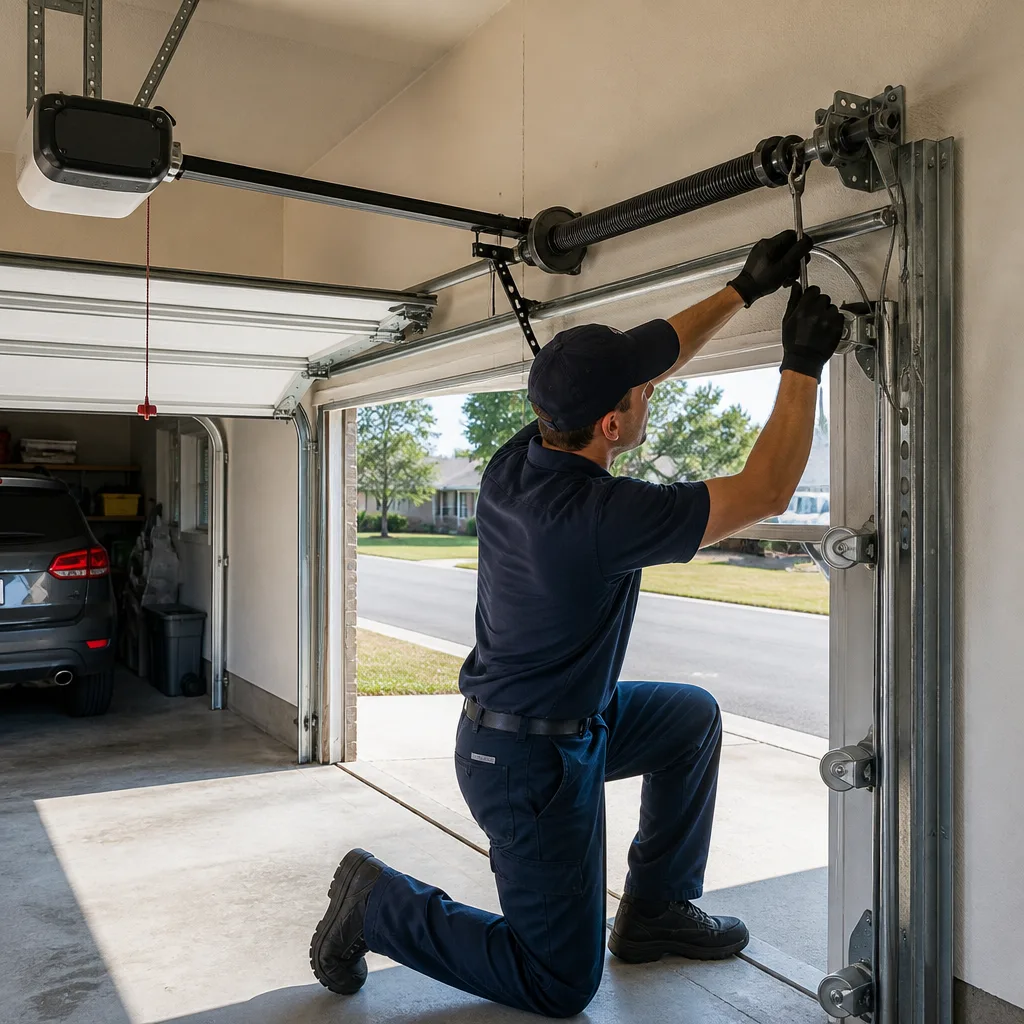 After
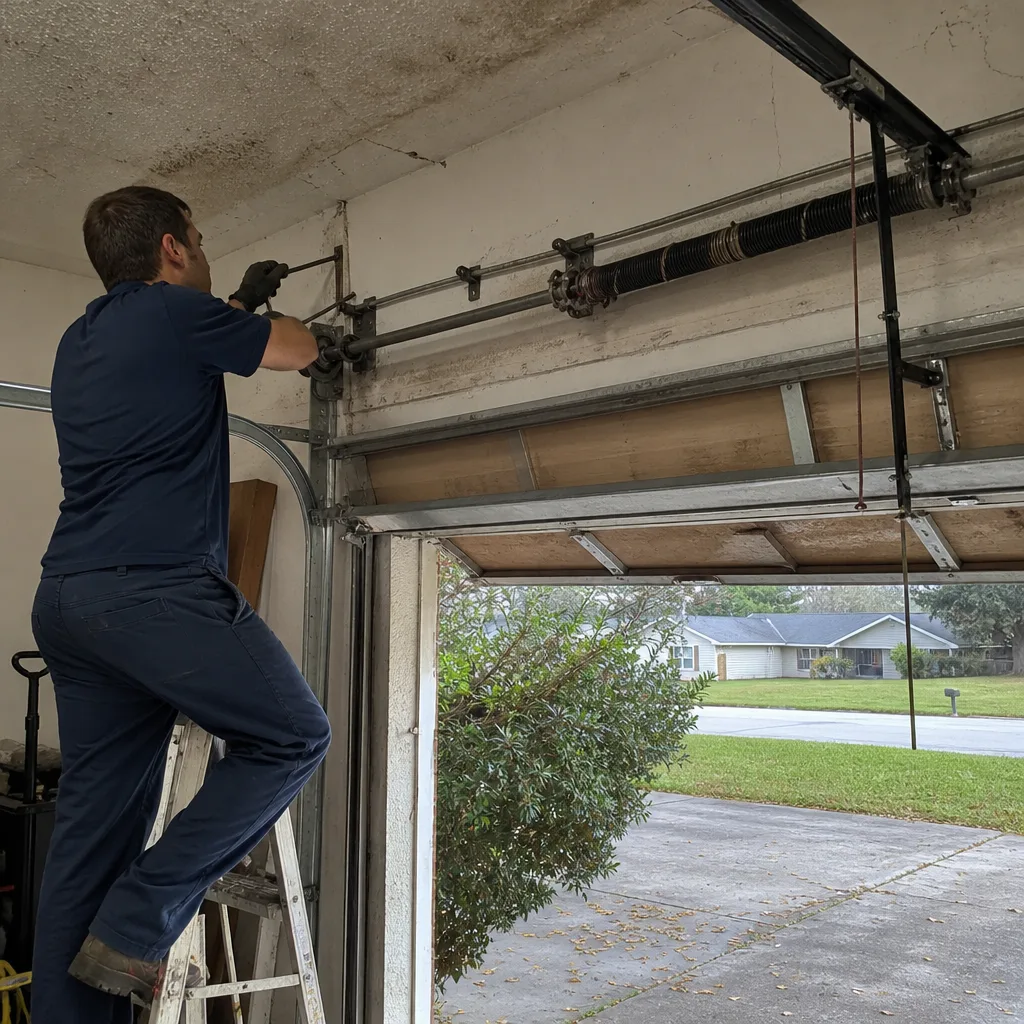 Before
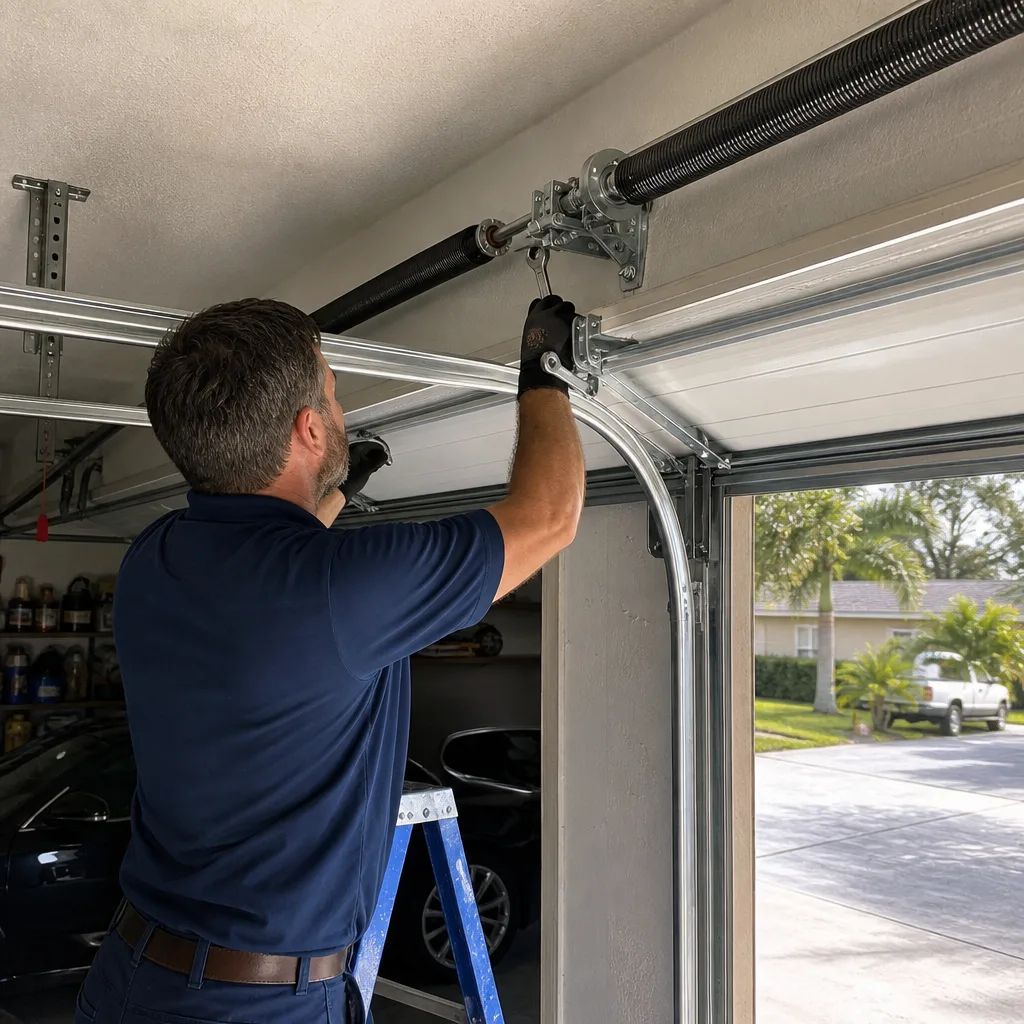 After
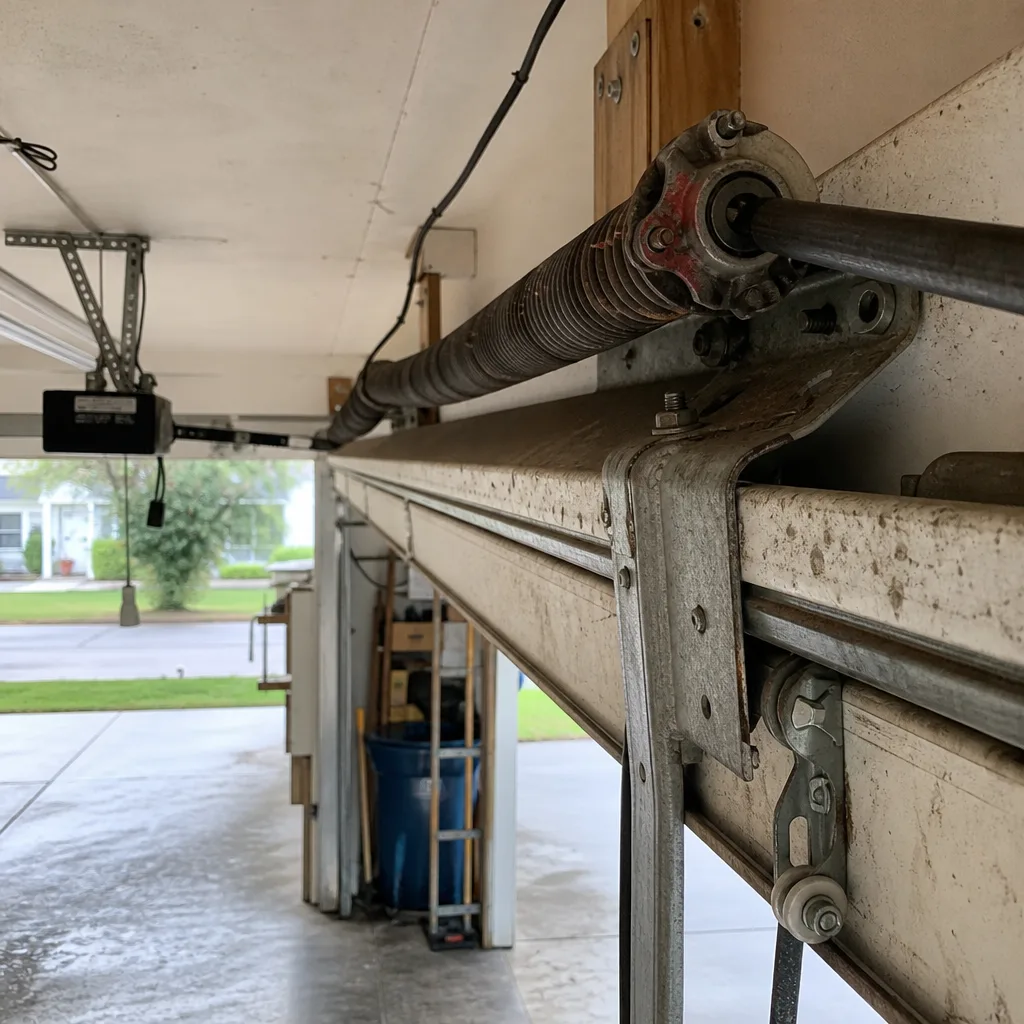 Before
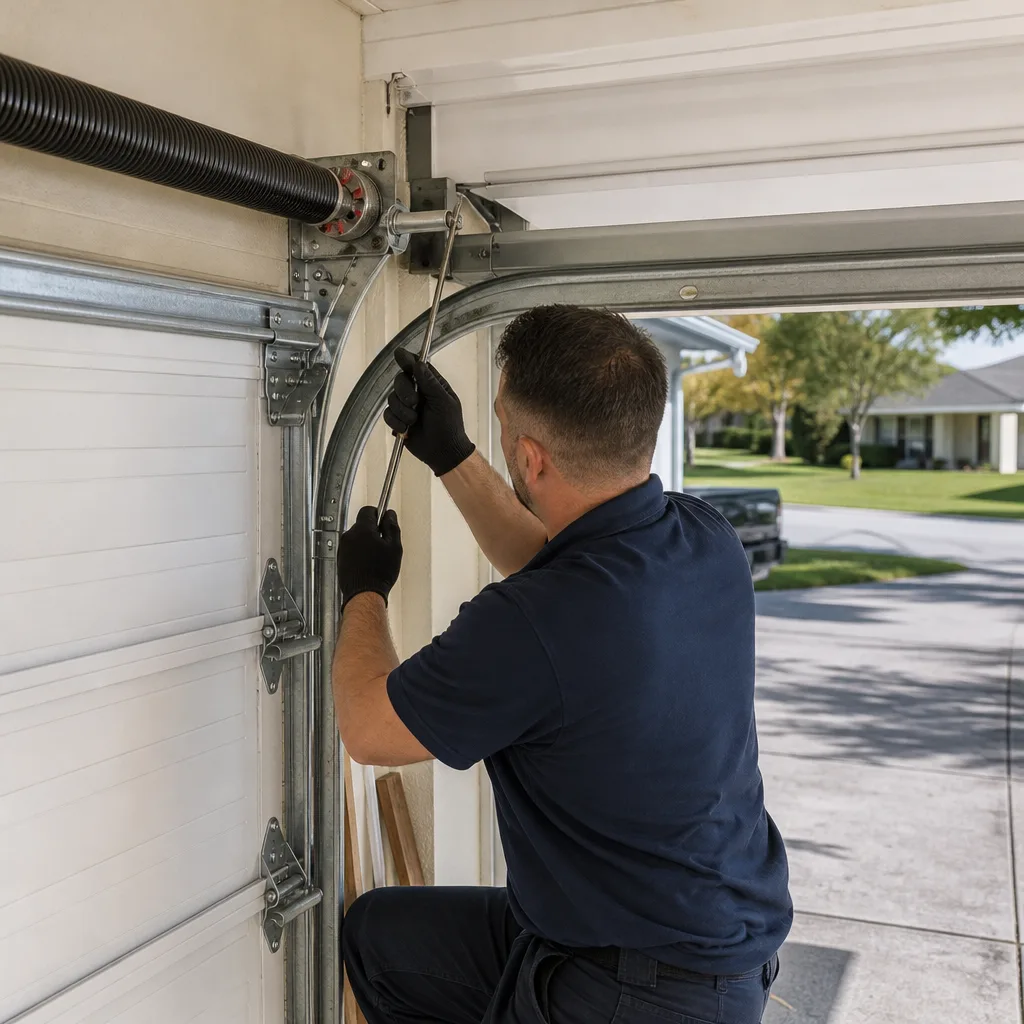 After
When to Call a Professional
Call a professional when the warning sign involves a component under high tension, an electrical system, or a failure that prevents the door from operating safely. That includes broken or visibly rusted springs, frayed cables, any track misalignment, any electrical smell, and any door that has come off its track. For these issues, the risk of serious injury from attempting a DIY repair outweighs any potential savings. If you’re unsure whether your situation qualifies, describe the symptom honestly and see what the response is. A reputable garage door specialist will tell you whether it’s safe to monitor or time to schedule. Stonebridge Garage Door Repair home offers a range of repair services focused exclusively on residential garage doors. If you’re in Lakeland, call (833) 589-8630 for a free estimate on any repair or replacement.
For opener-specific issues, Garage Door Opener Repair in Dade City covers the full range of smart, belt-drive, chain-drive, and battery-backup systems. We work on what’s already installed in your garage, from LiftMaster and Chamberlain to Genie, and we diagnose the specific failure rather than defaulting to a replacement recommendation. If the door itself is beyond repair, Garage Door Installation in Dade City covers complete door replacement with the same technician team that handles repairs.
Frequently Asked Questions
The most common warning signs we see in Lakeland are grinding noises from worn rollers, popping sounds from rusted springs, hesitation when the door starts moving, and bottom seal gaps that appear after the summer rainy season. Florida’s humidity accelerates spring rust and roller wear, making these signs appear earlier here than in drier climates.
Torsion spring replacement in Lakeland typically runs $180 to $340 for a standard residential door, depending on the spring size and whether it’s a single or double spring system. The cost is higher when a broken spring has damaged the cables or cable anchors. Call (833) 589-8630 for an exact quote, and remember that the price is always quoted and agreed before any work starts.
For spring failures, broken cables, and most repair issues, same-day service is often available in the Lakeland area. Our technicians carry the most common parts for LiftMaster, Chamberlain, Genie, Clopay, and other major brands on the truck, which means many repairs are completed in a single visit without a second appointment for parts.
No. The price we quote is the price you pay, and it’s agreed upon before any work begins. If a technician arrives and discovers the problem is different than described, we diagnose the actual issue and give you a new quote before proceeding. No work happens without your approval of the final number.
Our technicians carry a wide range of parts for the brands most commonly installed in Lakeland homes, including LiftMaster, Chamberlain, Genie, and Clopay. Because we service all major brands rather than specializing in one, we’re equipped to handle whatever system is already in your garage without a parts-ordering delay for most common repairs.
For a short period, yes, but the grinding noise means a roller bearing has failed and the roller is being destroyed with every cycle. Continued use will eventually cause the roller to seize, which can pull the door off its track. Schedule service within a few weeks if the noise is new. If the noise changes suddenly or the door begins jerking, stop using it and call immediately.
A burning or electrical smell from your garage door opener usually means the motor is overheating or a capacitor is failing, which happens more often in Florida’s summer heat when the opener runs hotter. Unplug the opener and have it inspected. Running it while it’s overheating shortens its life and creates a fire hazard in hot, dry conditions.
The Bottom Line
Your garage door is a machine, and machines talk. The hesitation, the grind, the pop, the uneven travel, the rust streaks, the gap under the door, none of these are random. They’re specific signals from specific components, and each one has a known progression if ignored. In Lakeland’s subtropical climate, that progression moves faster than it does in most of the country. The homeowners who save the most money aren’t the ones who find the cheapest repair. They’re the ones who act on the warning signs before the repair becomes big enough to need financing. For more guides & resources on keeping your door reliable, explore our blog. Listen to what your door is telling you. It’s been trying to get your attention.
Written by the team at Stonebridge Garage Door Repair, serving Lakeland since 2015. We diagnose first, recommend second, and garage doors are all we do.